
How long you can spend the winter abroad without losing provincial health coverage
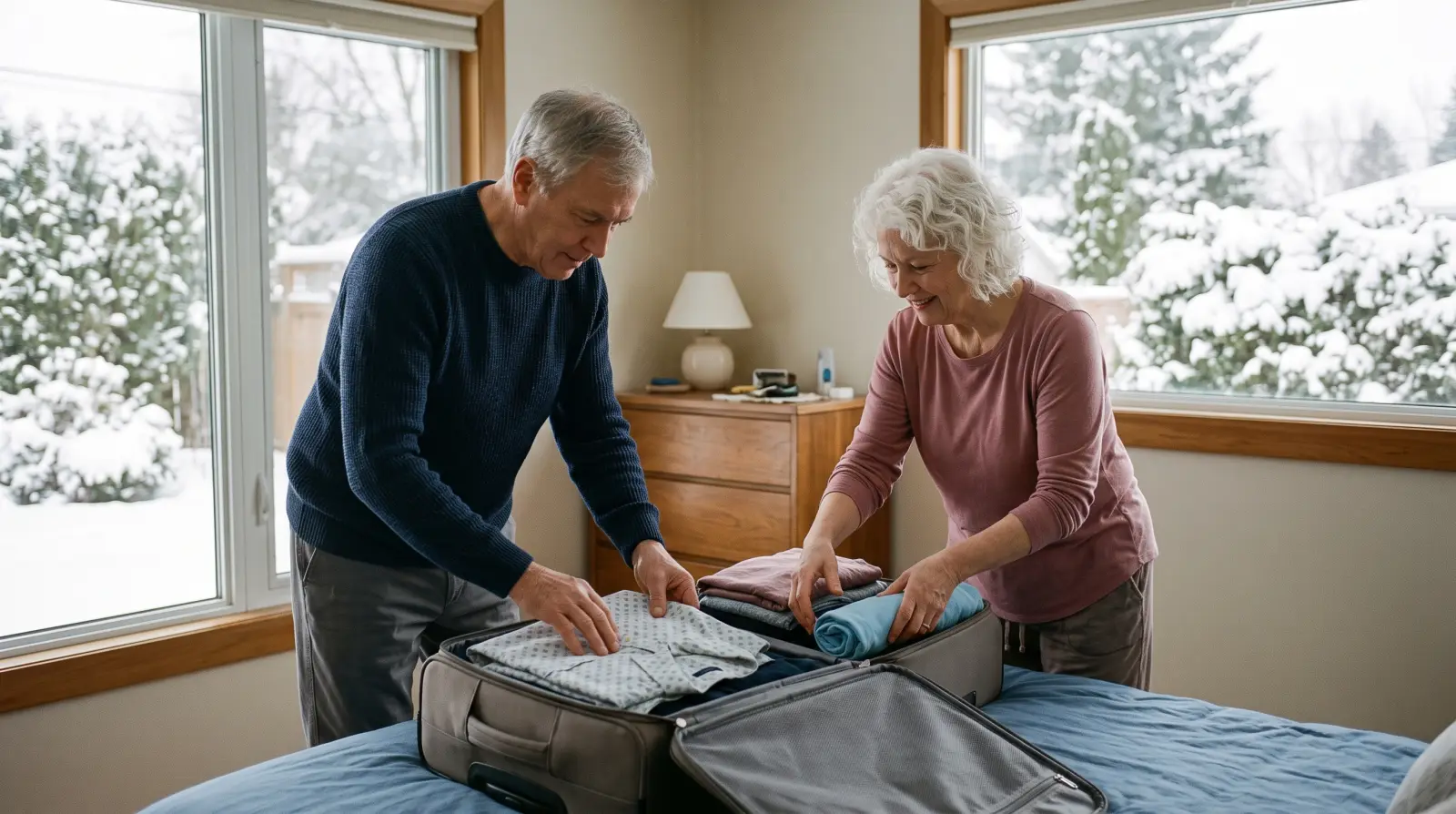
Ontario counts 153 days at home, Quebec counts 183 days away, British Columbia counts calendar months. The rules are provincial, and they are not the same.
Every autumn, a good many Canadian retirees start counting days. Not to Christmas, but to the date they can leave the snow behind, and then, more carefully, to the date they have to be back. The counting matters because provincial health coverage depends on living in the province, and each province decides for itself how much time away is too much.
The rules are not national. A trip that is fine for a couple from Ontario can cause problems for a couple from Quebec, and a couple from British Columbia counts in calendar years rather than rolling ones. Here is how four large provinces describe their rules, why the counting method matters, and what provincial plans do not pay for even when coverage stays in place.
Four provinces, four ways of counting
| Province | What the plan counts | Main limit for vacation travel |
|---|---|---|
| Ontario (OHIP) | Days physically present, in any 12-month period | At least 153 days in Ontario; away more than 212 days in a 12-month period may mean reapplying |
| Quebec (RAMQ) | Days absent, per calendar year | Absent less than 183 days, consecutive or not; trips of 21 days or less and departure and return days are not counted |
| British Columbia (MSP) | Time away, per calendar year | Vacation absences of up to seven months in a calendar year; contact Health Insurance BC if away six months or more |
| Alberta (AHCIP) | Days present, in a 12-month period | Outside Canada less than six consecutive months; recurring vacations of up to 212 days in 12 months may still qualify if you notify AHCIP before leaving and on return |
Other provinces and the territories have their own rules. If yours is not listed, the provincial health ministry's page on travelling outside the province is the place to look before booking.
Why the counting method changes the answer
Take an illustrative couple who would like to be away from 1 November to 30 April, about 181 days.
- Ontario counts presence in any 12-month period. They would be home roughly 184 days in the year, above the 153-day minimum, and away less than 212 days. On the face of it, the trip fits.
- Quebec counts absence per calendar year. November and December fall in one year (61 days), January to April in the next (120 days). Neither year reaches 183 days. But a three-week summer trip to see family out of province, if it ran longer than 21 consecutive days, would be added to that year's total.
- British Columbia also works per calendar year and allows up to seven months of vacation absence. The same split applies, but anyone away six months or more in one calendar year is asked to contact Health Insurance BC.
- Alberta asks that time outside Canada be less than six consecutive months. At 181 days the couple would be very close to that line, so a week's delay coming home would matter. Notifying AHCIP is part of the rule for recurring vacation absences.
The same six months, in other words, can be comfortable in one province and tight in another. The consequences of getting it wrong are not small. RAMQ, for example, says a person who exceeds the limit can lose eligibility for the whole year and may have to repay the cost of services received.
Covered does not mean paid in full
Even with coverage intact, provincial plans pay only part of the cost of care abroad. Ontario publishes its limits for emergency out-of-country care: up to $400 a day for higher levels of inpatient hospital care, $200 a day for other inpatient care, and up to $50 a day for outpatient services. British Columbia warns that the gap between what a provincial plan pays and the actual bill can be large, especially in the United States.
The provinces are unusually direct about this. Ontario calls travel medical insurance essential and notes that OHIP does not pay to bring a patient home. British Columbia strongly advises buying additional private insurance even for a trip of a single day, and notes that BC PharmaCare generally does not reimburse prescriptions bought outside the province. RAMQ says its drug insurance plan does not cover purchases outside Quebec.
- The maximum number of days covered per trip, and whether extensions are possible from abroad.
- How pre-existing conditions are treated, including any requirement that a condition has been stable for a set period.
- Whether the medical questionnaire has been answered completely; inaccurate answers are a common reason claims are refused.
- Whether repatriation to Canada is included.
The pension side of a long winter
Winter travel can also touch federal benefits. CPP and OAS payments continue during an ordinary trip. The Guaranteed Income Supplement is different: Canada.ca states that GIS payments stop if you leave Canada for more than six months. For a retiree who relies on GIS, that is another reason to keep the trip comfortably short of six months. Our article on CPP and OAS starting at different times explains how the federal pieces fit together.
A long winter away also concentrates health spending. Premiums and out-of-pocket costs can be large, and some may count toward the medical expense credit; see which medical receipts are worth keeping.
Who this matters for, and what to check
- Your own province's rule, in its exact wording: calendar year or rolling 12 months, days present or days absent.
- Every trip in the year, not only the winter one. Summer visits to family and autumn trips count too.
- Whether you must notify the plan before leaving, as Alberta and British Columbia ask in some cases.
- Your insurance policy's day limit, which can be shorter than the provincial allowance.
- Any GIS or other income-tested benefit with its own absence rule.
The calendar is the plan
Spending the winter somewhere warm is entirely compatible with keeping provincial health coverage, but only if the trip is planned against your own province's rules rather than a neighbour's. Mark the departure and return dates on a calendar, count them the way your province counts, add every other trip of the year, and buy insurance for the gap the provincial plan will not pay. The official provincial pages are short and worth reading before every season, because the details change.
Official sources
- Government of Ontario: OHIP coverage while outside Canada · extended absences, $400 / $200 / $50 daily limits, travel insurance
- Régie de l'assurance maladie du Québec: eligibility conditions · the 183-day calendar-year rule and the 21-day exception
- Government of British Columbia: leaving B.C. temporarily · seven-month vacation allowance, contacting Health Insurance BC, private insurance
- Government of Alberta: leaving Alberta affects health care coverage · 183 days, six consecutive months outside Canada, recurring absences up to 212 days
About this article. This is private sponsored information published by FinanceAdvice OÜ under the Saude Animal name. It is not a Government of Canada, Service Canada or Canada Revenue Agency website or publication and has no affiliation with any government body. Nothing here is financial, tax, legal or medical advice, and no figure is a promise, quotation or entitlement for any reader: every example is illustrative, and amounts and rules depend on personal circumstances and change over time. Figures were checked against the official sources listed above on . There are no applications and no fees on this website. Never give your Social Insurance Number, banking details or My Service Canada Account / CRA sign-in details to a website in response to an article. For your own payments and records, use My Service Canada Account or contact Service Canada directly.

 Pensions



 Home